Why Most Follow-Up Strategies Fall Short
Many businesses think they have a follow-up strategy just because they send a reminder email or phone call when they remember. The instinct to stop after one unanswered message is understandable but without a clear plan, follow-ups become inconsistent.
The fix isn't complicated, but it does mean treating following up as something you build in advance, not something you improvise message by message. A real strategy means deciding, before the first message ever goes out, how many touches you’ll send, how far apart they’ll be spaced, and what each one is actually meant to accomplish. The most effective follow-up strategies create a consistent customer journey rather than isolated touchpoints.
The following strategies can help you build a follow-up process that keeps customers engaged long after the first interaction.
Start by Mapping the Customer Journey
Instead of thinking of a follow-up as a single reminder, consider every point where communication can improve the customer experience.
Ask questions like:
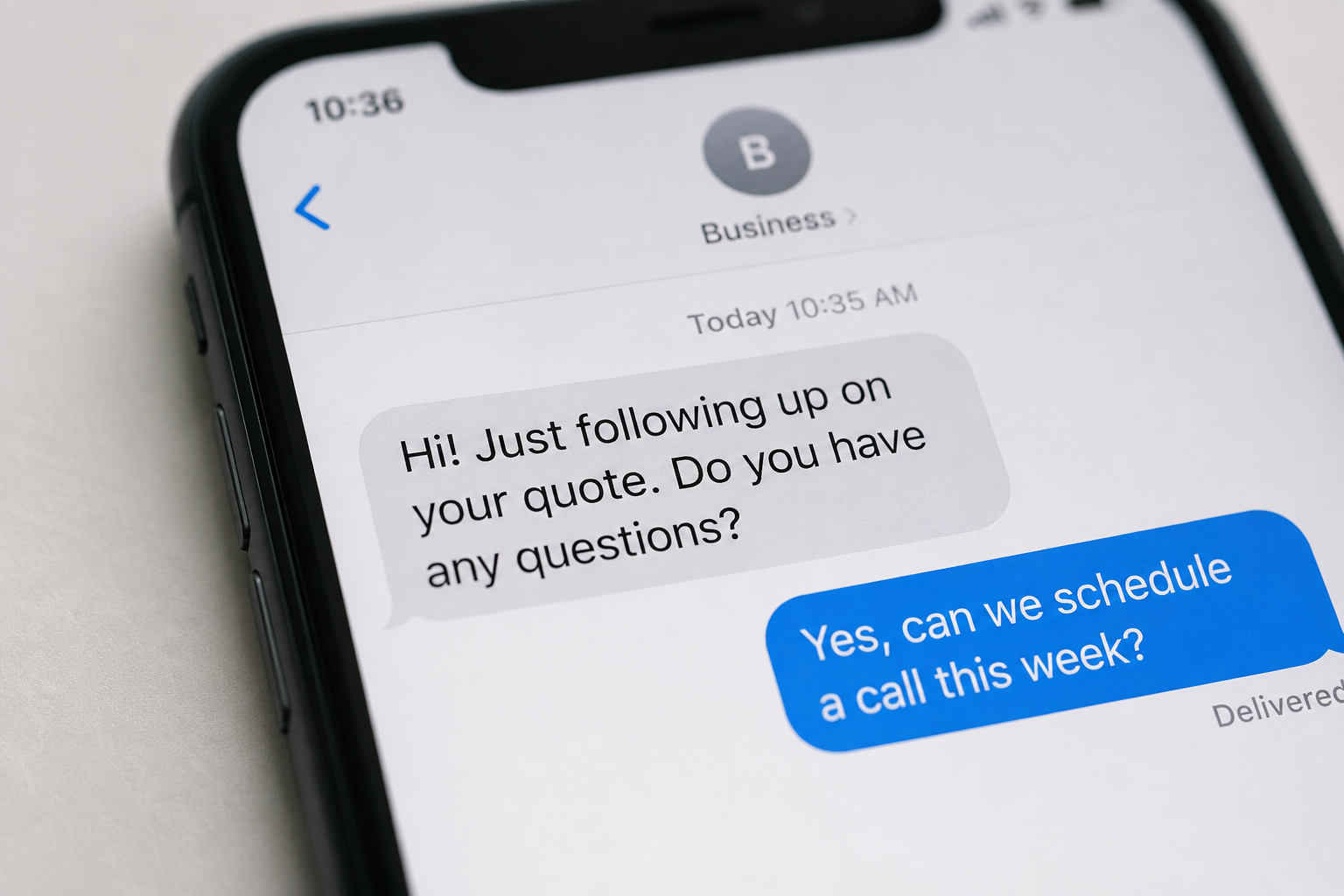
- What happens after someone requests a quote?
- How do customers receive appointment reminders or order updates?
- Do customers hear from us after their purchase?
- When do we ask for reviews or feedback?
- How do we reconnect with customers who have gone quiet?