As businesses shift more customer interactions to messaging, the supporting infrastructure becomes critical. Initial integrations often work seamlessly: a webhook is configured, a test message is sent, and the system is deployed. However, when a campaign reaches 40,000 recipients, issues such as undelivered messages, duplicates, and inconsistent delivery counts quickly emerge.
For engineering and operations teams, building a scalable messaging system requires attention to three fundamentals: throughput, latency, and reliability.
Throughput: Designing for Volume
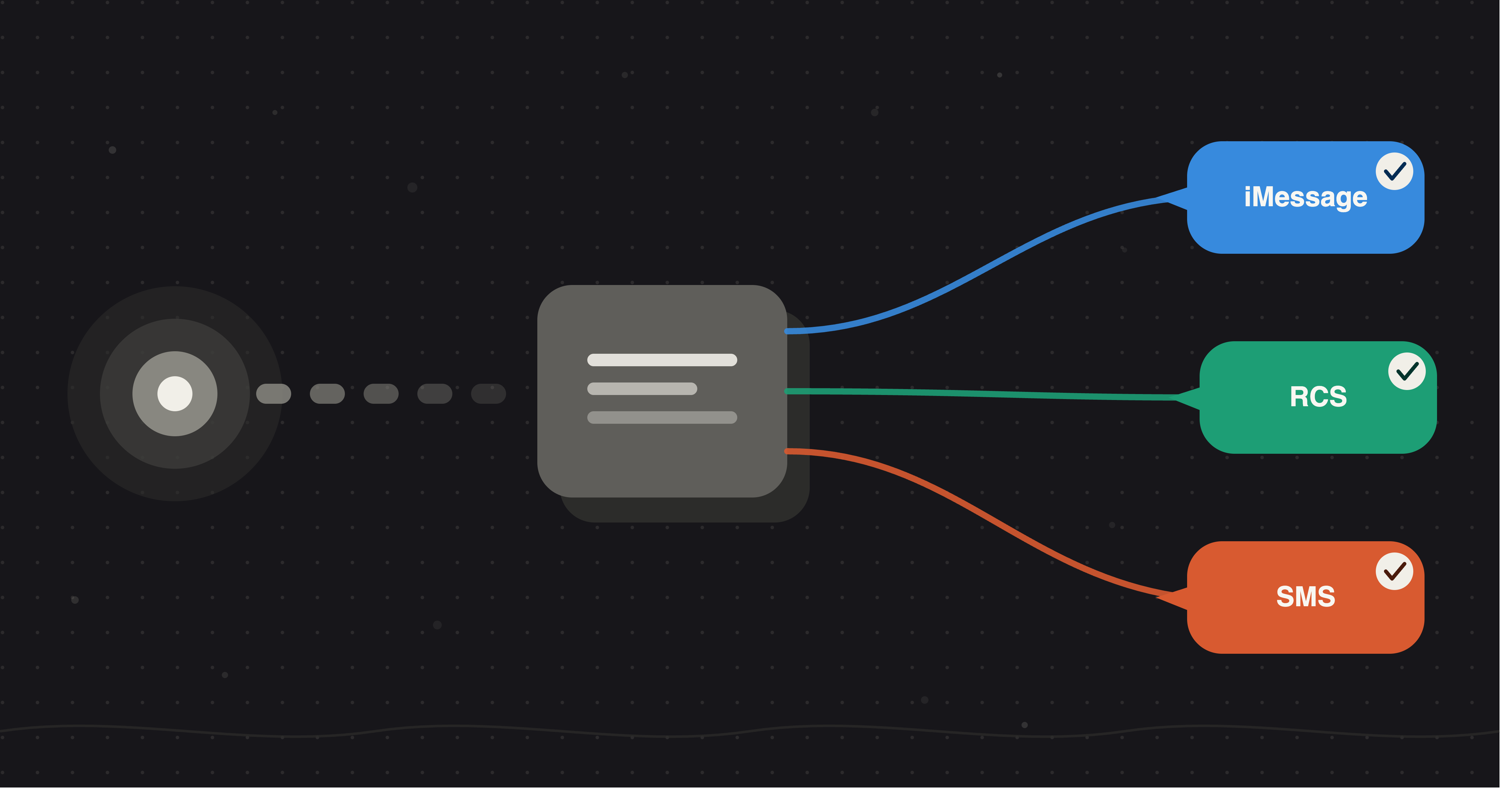
Throughput is how many messages you can push through a given identity, channel, or system in a given time window. A business might begin by sending a few thousand customer messages over each month. Over time, that can grow to hundreds of thousands across iMessage, RCS, and SMS.
The challenge extends beyond having an API that can send messages. The overall architecture must accommodate demand spikes without creating issues for the customers. This requires careful consideration of message intake, queuing, processing, and the system's response to sudden increases in demand.
Latency: Timing Matters
In customer messaging, speed directly impacts the user experience. Latency may occur at various stages, including event generation, internal processing, API requests, message routing, and final delivery.
Engineering teams need visibility into where delays occur. Not all messages require instant delivery; transactional confirmations may need near-real-time processing, while scheduled follow-ups can tolerate more latency.