
For years, the standard model for conversational AI agents was simple. You put a chatbot on the company's website and wait for customers to start a conversation. But that setup is becoming outdated. In 2026, more businesses are expanding to AI agents beyond the website chat bubble and into messaging channels like SMS.
The Chat Widget's Built-in Limit
Website chat was useful because a customer could visit a website, ask a question, and get an answer without always needing to speak to a person. But that chat widget's flaw is that the conversation is tied to the website. Once someone leaves the site, continuing that conversation can become more difficult unless the widget has captured their identity or another way to reach them.
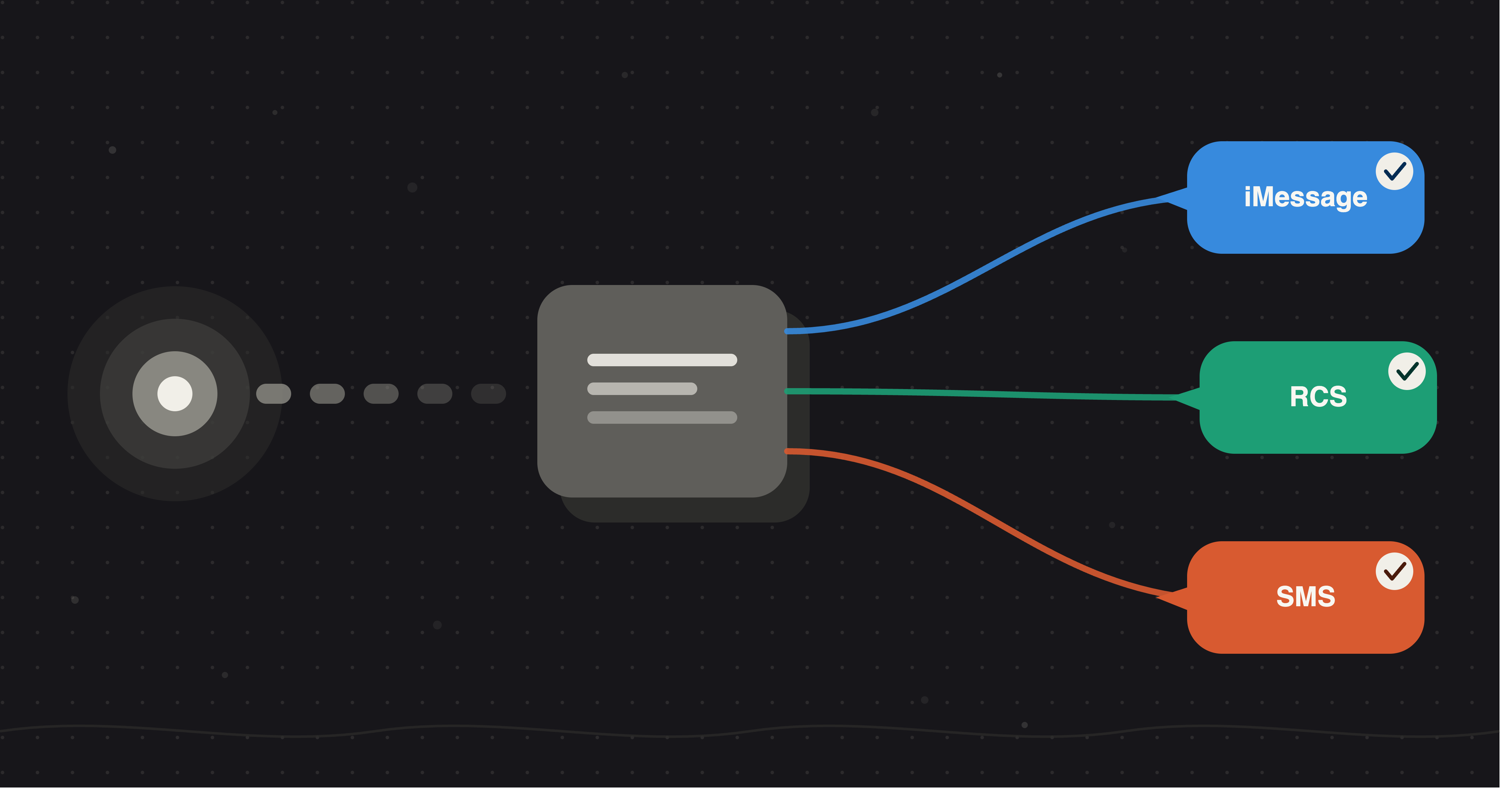
Texting doesn't have that problem. A conversation with an AI agent over SMS or iMessage lives in the same inbox as everything else. SMS and messaging apps give businesses a continuous place to keep the conversation going. Nobody has to remember which support page they were on. They just open Messages.
The Productivity Case Behind the Shift
That shift lines up with how quickly AI got good enough to be trusted with real conversations. A peer-reviewed study from researchers from MIT and Stanford found that AI assistance increased customer-support agents’ productivity, measured by issues resolved per hour, by 15% on average, with the largest gains among newer and lower-skilled workers.
The technology isn't just closing the distance between a good and a mediocre support rep, it's doing it inside a channel customers already just with the rest of their communication.
The Trust Factor in Messaging
Convenience isn't the only reason for the shift from widgets to AI agents. There's a trust factor too.
When an AI agent enters enters that familiar environment, the interaction feels more natural from the start. The customer doesn't have to learn a new system or dig through for a past conversation.
However, that familiarity also raises the stakes. If an AI agent misreads a customer's question, misses signs that they're frustrated, or keeps responding when it should stop, the interaction doesn't just disappear when the customer closes the chat. It sits in the same thread as everything else in that customer's inbox.
See what your conversations are really saying
Score a live message in the Bloobability playground, then wire the asses API into your own stack. No account or code required.
Open the Bloobability playgroundThe Bigger Picture
This isn't about replacing a chatbot or moving it to a new a spot. It's a sign of something bigger. Messaging is becoming a more important part of how businesses manage customer relationships, extending beyond support into sales, scheduling, commerce, and follow-up.
One text thread can start as an order inquiry, then turn into a sales follow-up a few weeks later. But making that work requires more than only an AI model. Businesses need a way to actually send and receive messages reliably, keep track of who's who, remember what was already said, and connect to the tools they already use, like a CRM.
This isn't the same as adding an AI chatbot; it's building an AI agent into customer communication infrastructure. That difference matters once businesses that figure this out early can make messaging feel less like another support channel and more like a direct interface between customers and the business.
Where this leaves the chat widget
It's not dead. It's still useful for someone actively comparing options on a site in the moment. But as the default place customers expect to reach a business, it's fighting something that's already sitting in their pocket.
Ready to build the messaging site?
If you're moving an AI agent into SMS and iMessage, our guide walks through the production patterns that keep a bot from falling apart at scale, from message splitting to conversation memory.
Read how to build an iMessage AI botFrequently asked questions
- What is an AI messaging agent?
- An AI messaging agent is a conversational AI system that operates inside a customer's existing messaging app, such as SMS or iMessage, instead of a separate chat widget on a website. It can answer questions, resolve support issues, and stay in an ongoing thread the customer already checks.
- is this different from a chatbot?
- The underlying model can be similar, but the delivery isn't. A chatbot lives on a website and the conversation ends when the tab closes. A messaging agent lives inside SMS or iMessage, so the thread stays open and the customer can pick it back up anytime.
- How do businesses keep track of AI conversations at scale?
- Most teams can't manually review every AI-driven conversation once volume grows. Tools like Bloobability read conversations directly and flag the ones that need a person, without requiring anyone to watch every thread in real time.
- Does this replace the website chat widget?
- Not necessarily. The widget still has a role for someone actively comparing options on a site in the moment. But messaging is becoming the more durable channel for conversation that continue after the customer leaves the website.