From Rule-Based Bots to Conversational AI
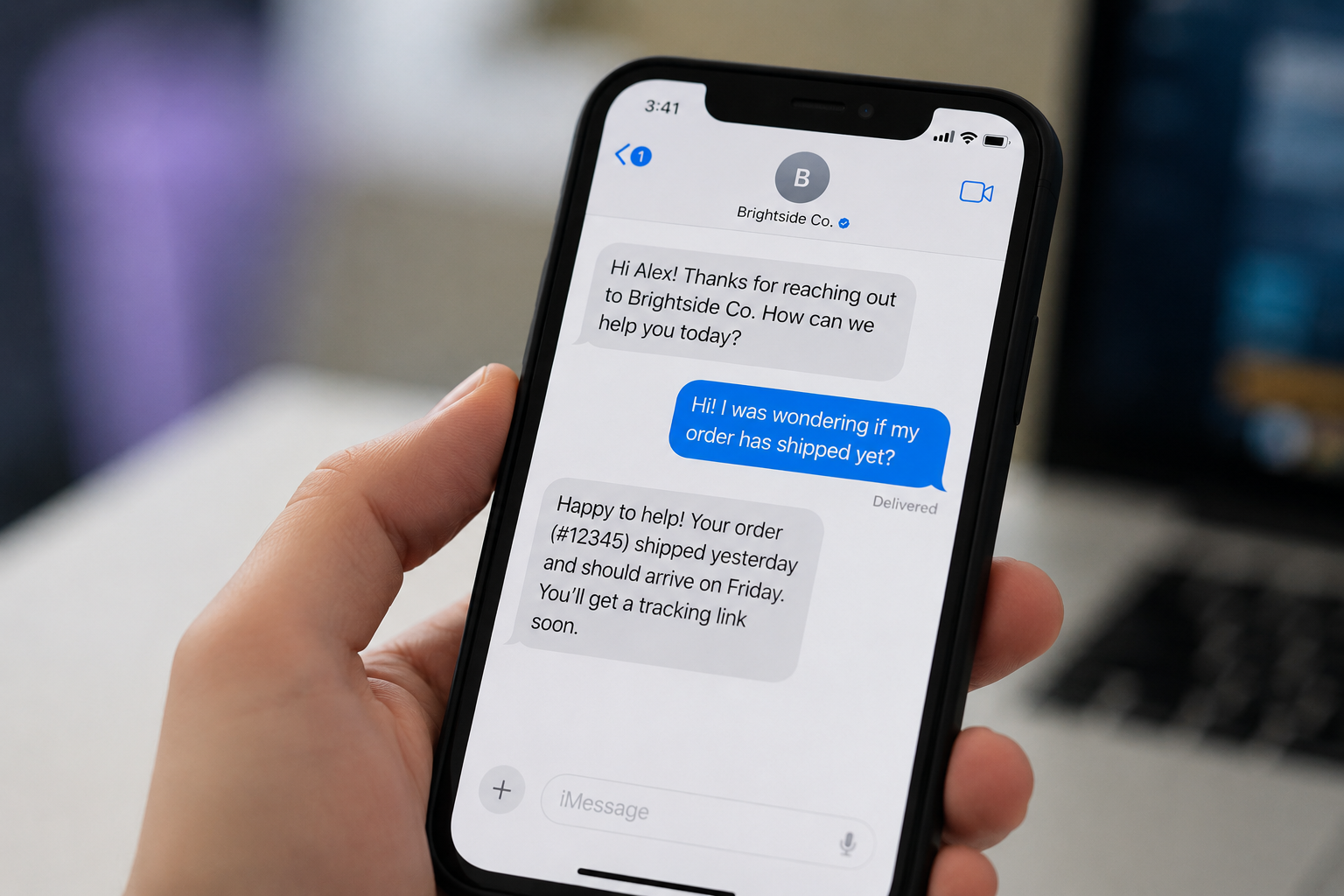
Modern AI messaging exceeds the expectations of early chatbots. They relied on keyword matching and often failed due to unexpected phrasing and long delays in reaching a representative. While this old model still shapes perceptions of “AI customer service,” today AI assistants understand natural language, retain conversational context, and deliver responses that feel genuinely conversational.
Rather than relying on prewritten scripts, modern AI is trained on a business’s actual knowledge base, including its website, documentation, and FAQs. This enables genuine two-way conversations, even when replies do not follow expected patterns. As a result, AI messaging has become reliable enough for widespread businesses to adopt. Industry estimates from Grand View Research project the AI customer service market surpasses $15 billion in 2025 and is projected to grow at a 23.2% CAGR through 2033, reaching nearly $84 billion.
Companies using AI assistants to text follow ups, report response rates increased by up to 88% compared to manual outreach, according to Salesmsg’s 2026 platform data. The rest of that same date reinforces the pattern. AI agents have that capability to respond to inbound leads in under a minute, compared to roughly 15 minutes for an average human rep, messages kept under 100 characters consistently pull the highest response rates of any length tested, and 42% of all replies come from a follow-up message rather than the first text sent.
Customers Want to Message Businesses, Not Call Them