Guides4 min read
iMessage vs SMS for Business: Which Should You Use in 2026?
iMessage vs SMS for business messaging in 2026: read rates, cost, security, features, and deliverability compared — plus how to use both with automatic fallback.


iMessage vs SMS for business messaging in 2026: read rates, cost, security, features, and deliverability compared — plus how to use both with automatic fallback.
iMessage (the blue bubble) is Apple's internet-based messaging protocol. It is end-to-end encrypted, free to send over data, and supports rich features like typing indicators, read receipts, reactions, high-resolution media, and polls. SMS (the green bubble) is the carrier text standard — it works on every phone on earth, but it is capped at 160 characters, is not encrypted, is metered per message, and carries none of the rich features.
Here is how the two channels stack up on the dimensions that actually affect a business messaging program:
The reason businesses chase the blue bubble is engagement. Messages that land as iMessage feel personal rather than promotional, so they get opened and replied to at dramatically higher rates than green-bubble blasts that recipients have been trained to ignore. iMessage also shows read receipts and typing indicators, which means you get real signal on whether a customer saw your message — something SMS can never give you.
SMS still has one engagement advantage: universality. It reaches the recipient even when they have no data connection, and it reaches Android users that iMessage cannot touch at all. That is exactly why fallback matters.
SMS looks cheap per message but the real cost of an A2P (application-to-person) SMS program adds up fast: 10DLC or toll-free registration, per-segment carrier fees, carrier surcharges, and multi-segment billing on anything over 160 characters. Volume programs also fight carrier filtering that silently drops messages you already paid for.
iMessage sent peer-to-peer over a managed line is flat-rate — you are not billed per segment, and long messages, images, and polls do not cost extra. With Blooio, iMessage plans start at $39/mo flat with unlimited messages, and SMS fallback is available at pass-through carrier cost with no markup.
iMessage is end-to-end encrypted by default, so the contents are readable only by the sender and recipient. Standard SMS is transmitted in the clear over carrier infrastructure and can be intercepted or logged. For any conversation touching sensitive data — appointment details, account changes, verification flows — iMessage is the materially safer channel. See our deep dive on whether iMessage is encrypted for the full picture and what the HIPAA claims really mean.
Every one of those is available programmatically through the Blooio iMessage API. None of them exist in SMS.
SMS is the right channel when: the recipient is on Android, the recipient has no internet connection, or you need the absolute broadest reach for a critical alert. The mistake is treating that as an either/or. The correct architecture is iMessage-first with an automatic SMS fallback so every message lands on the best available channel for that specific recipient.
The highest-converting programs we see run hybrid: iMessage to iPhone users for engagement and rich features, with SMS (and RCS) fallback so nothing is ever undelivered. You get the blue-bubble reply rates where they are available and the universal reach of SMS everywhere else — from a single API call. We broke down the exact playbook in Hybrid Mode: SMS cold outbound + iMessage replies that convert.
Flat-rate iMessage from $39/mo with automatic SMS and RCS fallback. Free trial, no credit card.
Start free trial
Businesses are expanding AI agents beyond the website chat bubble and into messaging channels like SMS. Here's why that shift is happening, and what it means if you haven't made the move yet.
Bloobability is Blooio's customer conversation intelligence model. Describe what to track in plain English and it reads every text thread for you, returning a calibrated probability, a verdict, and a trust tier per policy. Try it live in the playground or call the API.
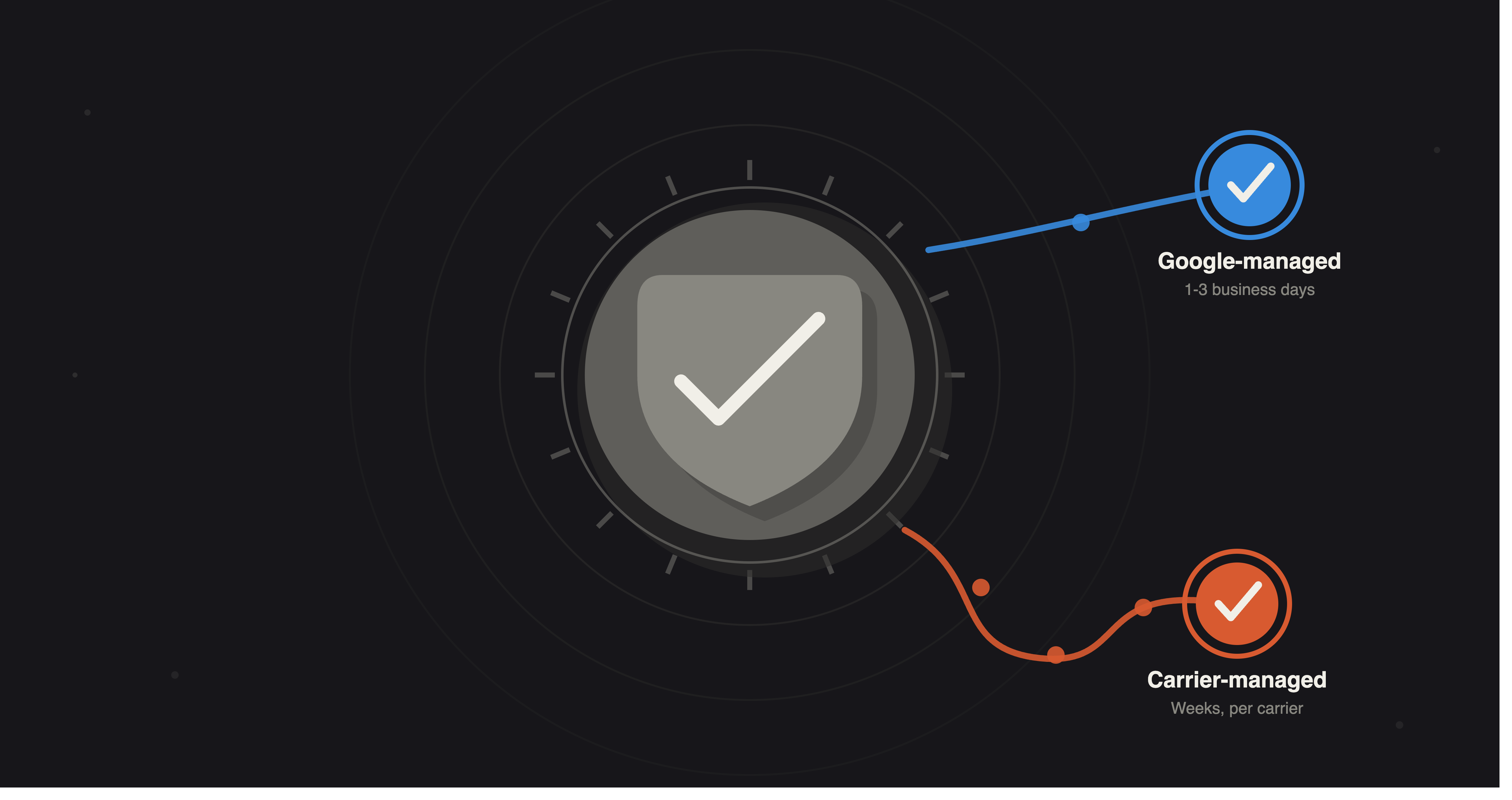
Getting an RCS agent approved to send has less to do with the API and more to do with configuration choices made before the first launch request — agent types, brand verification, and Google-managed vs carrier-managed tiers.