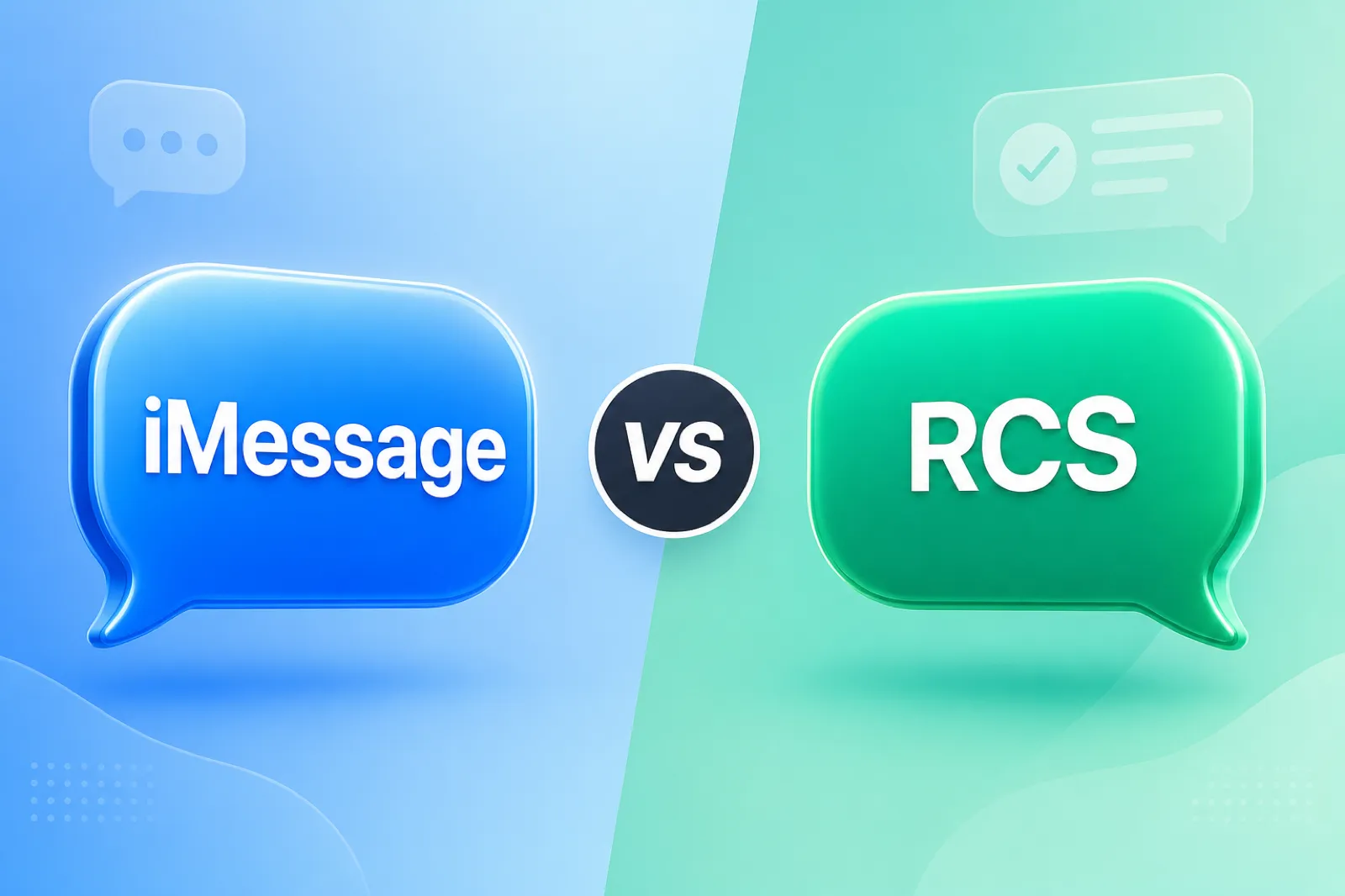
Both protocols offer rich messaging — but they differ on encryption, platform support, and business adoption. Here's how they compare, and why you don't have to choose.
iMessage is Apple's proprietary messaging protocol built into every iPhone, iPad, and Mac. It uses end-to-end encryption by default, supports rich media, read receipts, tapbacks, and typing indicators.
For businesses, iMessage means blue bubbles — the visual trust signal that tells recipients your message is personal, not spam. With 60%+ of US smartphones being iPhones, iMessage reaches the majority of your audience natively.
RCS (Rich Communication Services) is the GSMA standard designed to replace SMS. It adds read receipts, typing indicators, high-res media, and group chat features to the default messaging app on Android.
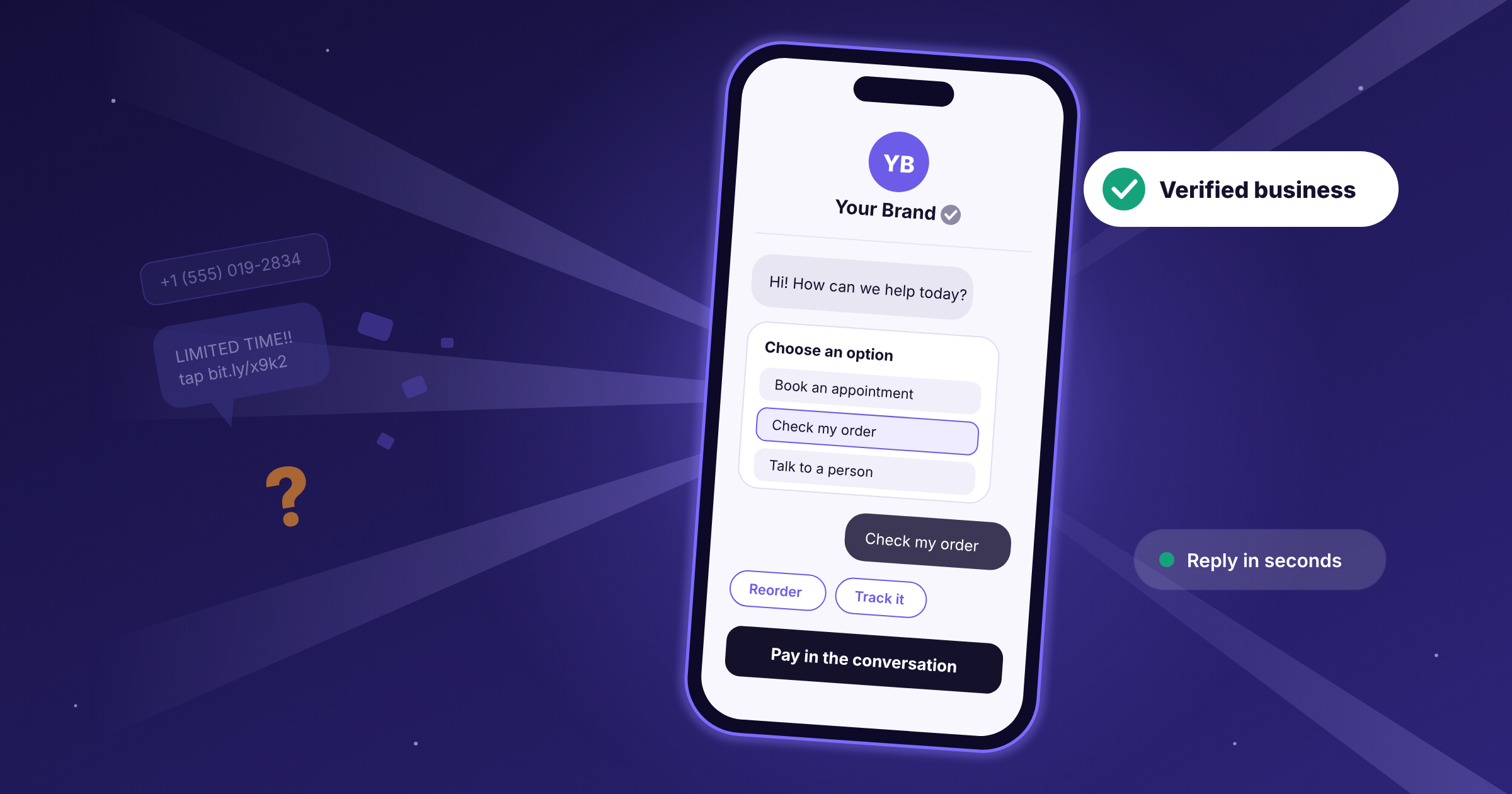
Apple adopted RCS in iOS 18, enabling richer cross-platform messaging between iPhone and Android. For businesses, RCS Business Messaging (RBM) offers verified sender profiles, branded messages, and interactive carousels.
How iMessage and RCS stack up on the features that matter for business messaging.
Both have real strengths. The best strategy is to use both.
Every iMessage is encrypted by default between sender and receiver. No carrier, no server, and no third party can read your messages.
60%+ of US smartphone users have iPhones. iMessage is the default — no app download needed, no opt-in required.
Blue bubbles signal a trusted, personal conversation. Recipients are more likely to read and respond vs. green bubble SMS.
RCS works on Android natively and on iPhone since iOS 18. It reaches the users iMessage can't — the other 40% of the US market.
RCS Business Messaging (RBM) lets brands send verified, branded messages with carousels, buttons, and suggested replies.
RCS is an industry standard backed by GSMA and all major carriers. It's the evolution of SMS — richer, but universally supported.
Blooio auto-detects each recipient's capabilities and sends via the best available channel. iMessage for Apple users, RCS for Android — one API, zero guesswork.
Call the Blooio API with a phone number and message. No need to specify iMessage or RCS — Blooio figures it out.
Blooio checks if the recipient supports iMessage. If yes, blue bubbles. If not, fall back to RCS or SMS automatically.
Track delivery, read receipts, and replies across both channels in one dashboard. Same webhooks, same data model.
Common questions about iMessage vs RCS for business.
It depends on your audience. iMessage offers end-to-end encryption and dominates on iPhone (60%+ US market share). RCS reaches Android users with rich features. For maximum coverage, use both — Blooio auto-detects capabilities and sends via the best channel.
Yes. Blooio sends iMessages to Apple devices and can fall back to RCS for Android recipients. You use one API and one dashboard — Blooio handles channel detection and routing automatically.
No, iMessage is Apple-only. Android users receive messages via RCS or SMS. Blooio automatically detects the recipient's capabilities and routes to the best available channel, so your messages always reach their destination.
Unlikely. Apple adopted RCS in iOS 18 for cross-platform fallback, but iMessage remains the default for Apple-to-Apple messaging with superior encryption and features. Both protocols will coexist — which is why Blooio supports both.
Start your free trial. Blooio auto-routes to the best channel for every recipient.